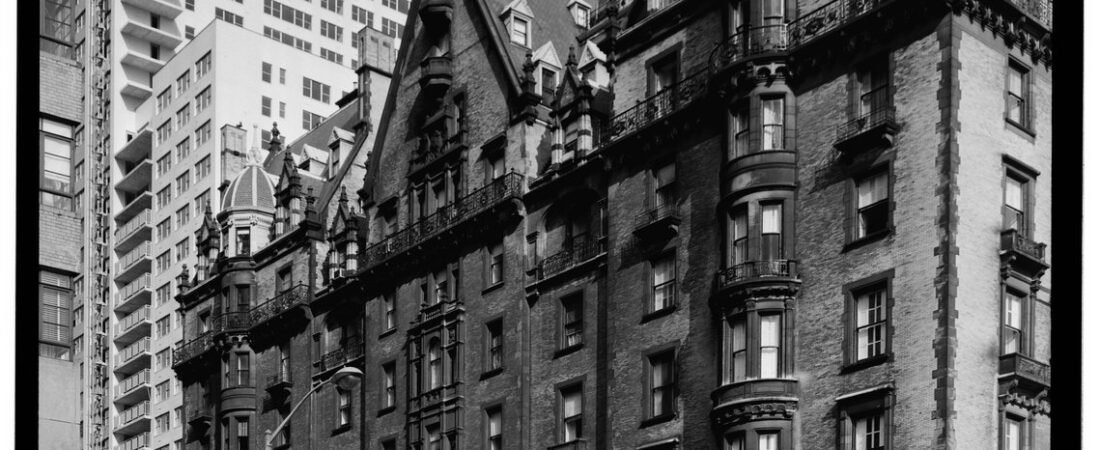
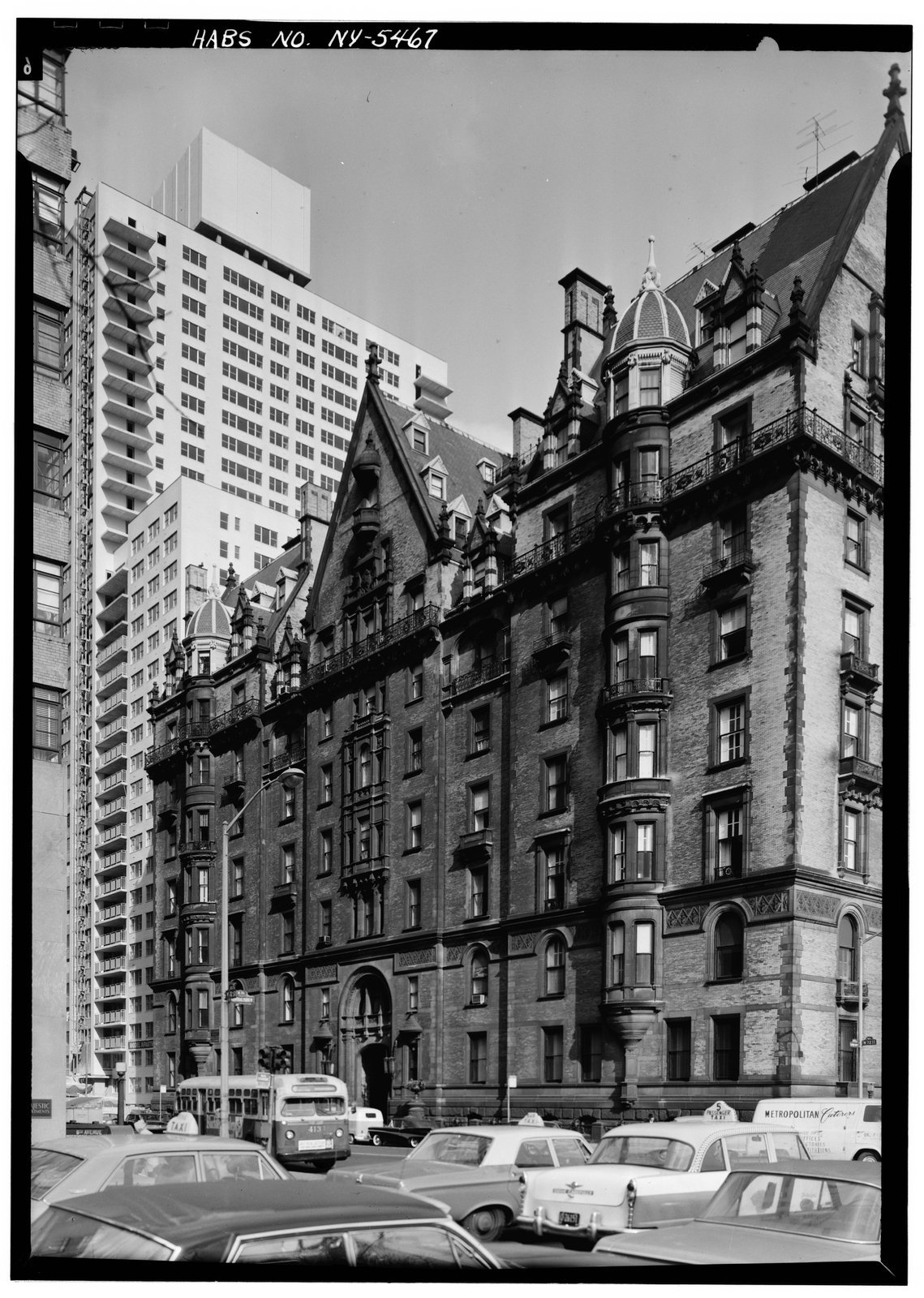
On the corner of 72nd Street and Central Park West stands a building that looks like it was designed to keep secrets. Steep gables, dark dormers, wrought-iron balconies, and a brooding German Renaissance facade — the Dakota has loomed over the Upper West Side since 1884, and in 1968, Roman Polanski looked at it and saw the perfect home for a coven of witches. This is the Bramford, the apartment building at the center of Rosemary’s Baby, and it might be the most ominous exterior in all of horror cinema.
The Scene
Rosemary’s Baby (1968) was Roman Polanski’s first American film, adapted from Ira Levin’s 1967 novel and starring Mia Farrow as Rosemary Woodhouse, a young wife who moves into the historic Bramford with her husband Guy — and slowly realizes her eccentric elderly neighbors have plans for her unborn child. The Dakota plays the Bramford in every exterior shot: its fortress-like mass and shadowy rooflines do half the film’s dread-work before a single line is spoken.
Here’s the part most people get wrong: almost none of the film was actually shot inside the building. The Woodhouses’ apartment, the Castevets’ cluttered lair next door, the infamous dream sequences — all of it was built on soundstages at Paramount in Hollywood. The Dakota contributed its face and its aura, and that turned out to be enough. When the camera tilts up at that dark facade while Krzysztof Komeda’s lullaby plays, you understand exactly why Rosemary should never have signed that lease.
The Backstory
The Dakota was completed in 1884, designed by Henry Janeway Hardenbergh — the same architect behind the Plaza Hotel. It was one of New York’s first true luxury apartment buildings, constructed when the Upper West Side was still half wilderness. Legend says developer Edward Clark named it “the Dakota” because the neighborhood was then as remote as the Dakota Territory, a joke about just how far uptown his grand project sat.
The building has been collecting famous residents for over a century: Lauren Bacall, Leonard Bernstein, Judy Garland, Boris Karloff, Roberta Flack, Paul Simon — and, most famously, John Lennon, who was murdered in the building’s 72nd Street archway in December 1980. Yoko Ono still lives there. The co-op board is legendarily picky: it has reportedly turned down Madonna, Cher, Billy Joel, and other boldface names. A building this exclusive was always going to attract a fictional coven too.
The Dakota was designated a New York City landmark in 1969 — the year after Rosemary’s Baby came out — and a National Historic Landmark in 1976.
What to Look For
Stand on the Central Park side of 72nd Street and look west: the gabled roofline against the sky is the film’s signature angle. The arched 72nd Street entrance — flanked by the iron fence — is the building’s most photographed feature, and the one most loaded with real-world history. Directly across the street in Central Park sits Strawberry Fields, the memorial to John Lennon, which makes this corner a strange double landmark: horror cinema on one side, music history on the other.
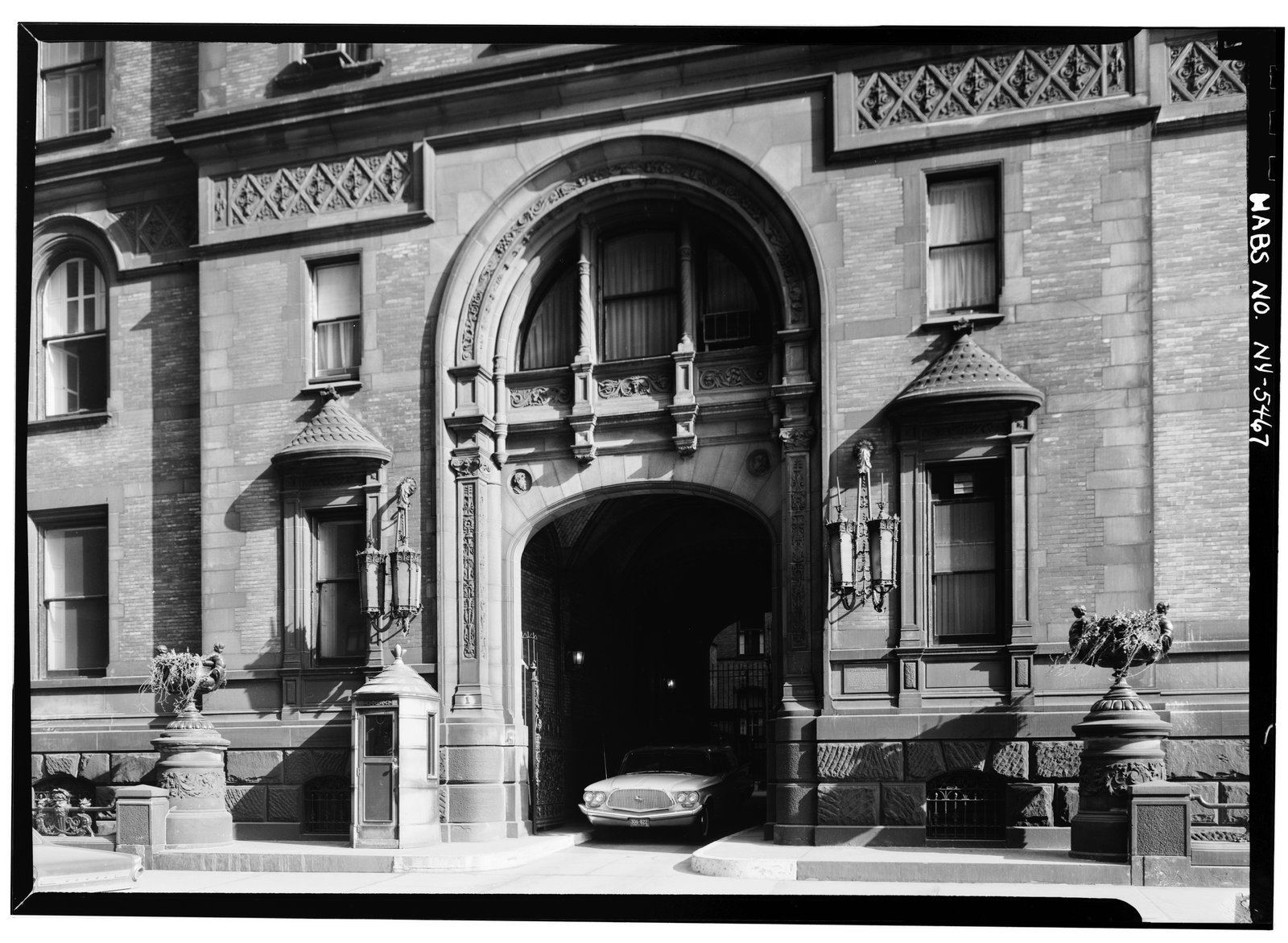
One important note: the Dakota is a private residence, not a tourist attraction. There are no tours, the courtyard is off-limits, and the doormen have seen every flavor of gawker since 1884. Visit in the daytime, take your photo from across the street, and keep it moving — the residents, witchy or otherwise, value their privacy.
Getting There
Address: 1 West 72nd Street, New York, NY 10023 — on the northwest corner of 72nd Street and Central Park West, on the Upper West Side.
The easiest route is the subway: take the 1, 2, or 3 train to the 72nd St station (Broadway), then walk one block east to Central Park West. Or take the B or C to 72nd St (Central Park West) and you’re practically at the front door.
Trivia
- Mia Farrow’s famous pixie cut was her own doing: she later wrote that she cut it herself earlier that year with a pair of fingernail scissors. The famous Vidal Sassoon “cut” was a staged publicity trim — Paramount had him take her 1.5-inch hair down to 1 inch for a photo shoot. The film’s “It’s Vidal Sassoon, it’s very in” line stayed in anyway, and the cut she gave herself became the defining haircut of the late ’60s.
- Frank Sinatra served Mia Farrow divorce papers on the set of Rosemary’s Baby — he wanted her to quit the film and co-star with him in The Detective instead. She chose the horror movie. History vindicated her.
- Ruth Gordon won the Academy Award for Best Supporting Actress for playing Minnie Castevet, the nosy neighbor with the infamous “chocolate mousse” — the only Oscar the film received.
- Composer Krzysztof Komeda wrote the film’s haunting lullaby score, sung by Mia Farrow herself. Komeda died from a head injury less than a year after the film’s release, at just 37.
- The Dakota’s board is so exclusive that even fictional evil had to audition: Polanski reportedly had to work to secure the building’s exteriors, and the production was only allowed limited access.
The Hunt Clue
“On Seventy-Second, a fortress of stone,
where Rosemary learned she was never alone.
Gables and archways, dark as the plot —
find the Bramford, but don’t eat what Minnie’s got!”
📸 Hunters’ Photos
Were you there? Submit your shot — approved photos join the gallery below. JPG, PNG, or WebP, max 5MB.
🎞️ From the hunters
No hunter photos yet — yours could be the first. 🎬